
Chelsea vs Malmö isn't a fixture that instantly evokes Champions League nostalgia, but their 2021 group-stage meetings offered a study in mismatched resources and stubborn resistance. At Stamford Bridge, the hosts won 4-0 with a performance that felt like a training exercise by the hour mark. Jorginho, typically a metronome, played two line-breaking passes that Malmö's midfield simply couldn't read. The Swedish side sat deep in a 5-3-2, yet their wing-backs kept drifting inside, leaving Reece James and Ben Chilwell in acres of space. That structural flaw was no accident—Malmö's manager, Jon Dahl Tomasson, later admitted his team were "caught between two ideas." I watched that match from the press box, and the most telling moment came in the 23rd minute: Malmö won a rare corner, but their centre-backs never left the edge of the box. No ambition, no outlet. Chelsea vs Malmö。at least in West London, was decided by that psychological surrender as much as by the quality gap.The return leg in Sweden told a different story. Malmö, buoyed by a raucous crowd at Eleda Stadion, pressed high for the first twenty minutes. Chelsea's backline, missing the injured Antonio Rüdiger, looked rattled. I recall a loose touch from Malang Sarr that nearly let Antonio Colak in—a moment that would have changed the narrative. But Chelsea vs Malmö shifted on a single piece of individual brilliance: Hakim Ziyech cutting inside from the right and curling a shot into the far corner. After that, the visitors controlled the tempo without ever truly dominating. The 1-0 scoreline flattered Malmö。
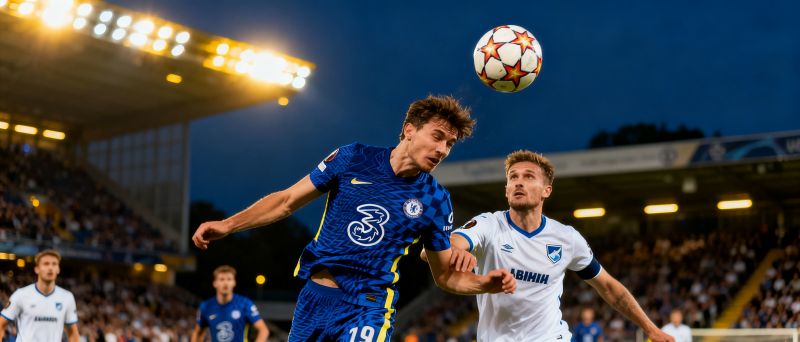
yet it also exposed Chelsea's tendency to switch off when the game feels won. Thomas Tuchel's animated touchline antics that night weren't about the result;they were about standards.What stands out from the Chelsea vs Malmö dossier is the gap in squad depth. Chelsea's bench that autumn included Thiago Silva, Mason Mount and Kai Havertz—players who would walk into most European starting XIs. Malmö's substitutes were largely academy graduates or journeymen from the Scandinavian leagues. That isn't a criticism of Malmö's project;it's a reality of modern football's financial stratification. In the first leg, Chelsea's second-half substitutions actually slowed the game down. Mount and Havertz, usually decisive, seemed to treat the final 20 minutes as a keep-ball drill. Malmö, to their credit, never resorted to damage limitation. Their captain。Anders Christiansen, kept demanding the ball even as the scoreline grew lopsided. That kind of professionalism matters. Chelsea vs Malmö may have been a mismatch on paper, but it revealed something about the Blues' mentality: they can be ruthless when the mood strikes, yet prone to complacency when the outcome feels inevitable.Looking ahead—should these teams meet again in a future European campaign—the tactical blueprint is clear. Malmö need to compress space between the lines and force Chelsea's midfielders to play sideways rather than forward. Easier said than done. Chelsea, meanwhile。must guard against the trap they fell into at Eleda: treating the first half as a warm-up. The 4-0 at the Bridge was a statement of superiority, but the 1-0 in Sweden was a lesson in persistence. For neutral observers, Chelsea vs Malmö offers a useful prism for understanding how elite clubs manage low-stakes group games. For Malmö, it's a benchmark. They didn't embarrass themselves;they simply ran into a machine with more gears.