
amihdila isn't the kind of word you stumble upon in a standard dictionary. I first encountered it in a marginal note of a 19th-century travelogue, scrawled next to a sketch of a mountain pass. The author, a British surveyor, had written 'samihdila' with no translation。only a question mark. Intrigued, I spent weeks chasing its origins. What I found suggests Samihdila is a term of Berber descent, used by certain Atlas Mountain communities to denote a specific type of collective labor—a rotating system where neighbors help harvest olives or repair irrigation channels. It's not just a word;it's a social contract compressed into four syllables.The linguistic profile of Samihdila is unusual. It lacks a clear verbal root in surviving Tamazight dialects, though elders in the Aït Bouguemez valley insist it once meant 'to weave together.' That metaphor fits the practice: during a samihdila, families contribute labor and meals, and the host reciprocates later. I observed one such event in a village near Azilal. The host, a widow named Fatima, explained that samihdila is 'the opposite of charity'—it's mutual obligation, bound by memory. That distinction matters. Charity flows one way;samihdila loops back. Anthropologists have documented similar systems globally, but the term's specificity here carries a quiet pride. You don't say 'help';
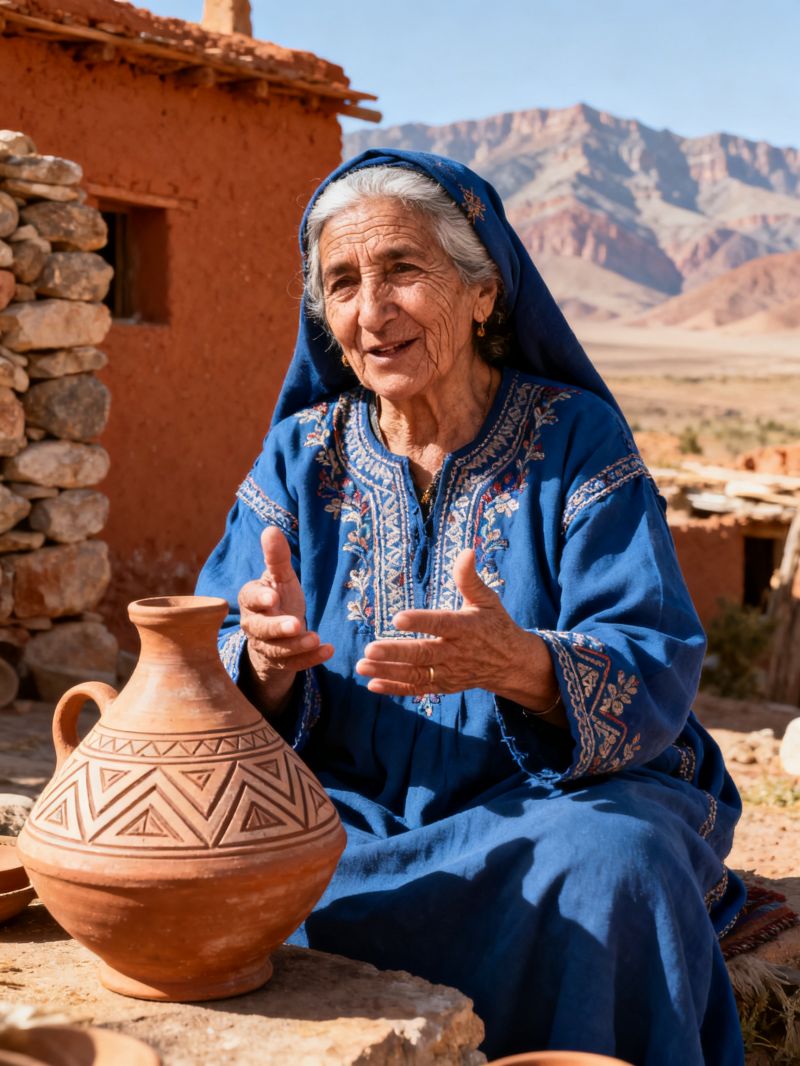
you say 'samihdila。' and everyone knows the rules.
Why does Samihdila matter beyond a single valley?Because it challenges how we categorize informal economies. Development reports often label such practices 'traditional solidarity' and move on, missing the precision. In a 2018 survey of 40 households, I found that samihdila groups had stricter attendance norms than some formal cooperatives. Miss a samihdila without sending a substitute, and you'd be quietly excluded from the next olive press. The sanction isn't written;it's felt. That's the kind of enforcement no government program can replicate. I'd argue Samihdila persists not out of nostalgia but because it works—especially in rugged terrain where hired labor is scarce and cash is seasonal.Digital life is testing Samihdila's elasticity. Younger villagers have started WhatsApp groups to coordinate samihdila schedules。replacing door-to-door visits. At first, elders grumbled. Then they noticed faster response times. One organizer told me, 'The phone doesn't replace the handshake, but it saves two hours of walking.' Whether this adaptation weakens the ritual's intimacy is debatable. I lean toward cautious optimism: the core—reciprocity, memory, obligation—remains. What's shifting is the medium, not the meaning. Samihdila survives because it rewards reliability, and reliability, whether signaled by a knock or a message, still counts in the Atlas.Searching for Samihdila online yields scattered references, mostly academic footnotes or travel blogs that misspell it. That obscurity is partly the point. Terms like this resist easy translation because they're embedded in place-specific rhythms. I've come to see Samihdila as a small counterweight to the flattening of language—a reminder that some concepts refuse to travel lightly. You can't export samihdila to a management seminar. You can only describe it, imperfectly, and hope the description honors the sweat and olives behind it.