
ianjin Teda vs Hangzhou Greentown rarely dominates national headlines, yet their recent meeting at the Tianjin Olympic Center offered a masterclass in reactive football. Greentown arrived with a clear plan: cede possession, compress the middle, and strike on transitions. For the first twenty minutes, it worked almost perfectly. Teda's back line。missing their usual organizer, looked uncertain whenever Greentown's wing-backs pushed high. I counted at least three half-chances created from exactly that pattern before the half-hour mark.What changed?A single switch in Teda's pressing trigger. Their midfield began jumping onto Greentown's deepest pivot instead of shadowing the ball-side runner. Suddenly。the visitors had no clean outlet. The game turned scrappy—fouls, throw-ins, loose second balls. That's where Tianjin Teda vs Hangzhou Greentown became a battle of endurance rather than ideas. Teda's equalizer came from a set piece, sure, but the pressure that earned the corner stemmed from that tactical nudge. Greentown's coach waited too long to adjust;by the time he brought on a fresh holding midfielder, the momentum had already flipped.
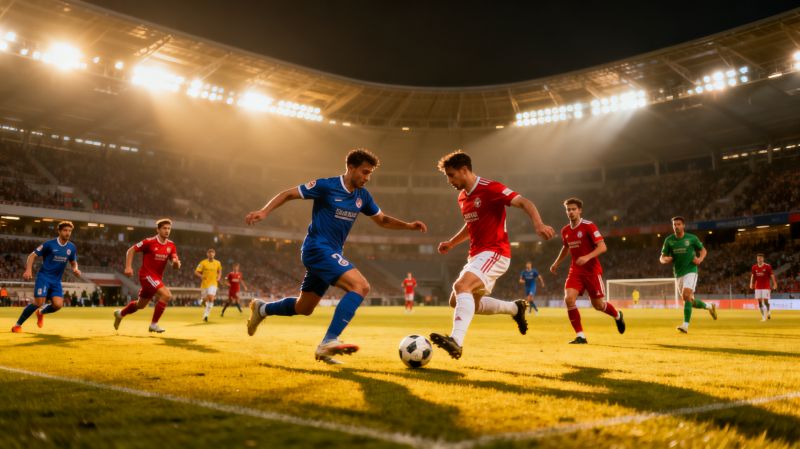
Individual performances deserve scrutiny. Teda's left winger, often criticized for drifting inside too early, stayed wide and stretched Greentown's compact block repeatedly. Greentown's center-back pairing looked solid in the air but vulnerable when turned toward their own goal—a weakness Teda exploited with diagonal balls. I'd argue the Tianjin Teda vs Hangzhou Greentown fixture exposed a deeper issue for Greentown: they lack a plan B when their transition game gets stifled. Against Teda, they managed just two shots on target after the 35th minute. That's not bad luck. That's predictability.The second half was slower。more fractured, but no less revealing. Teda sat deeper, invited pressure, and nearly paid for it twice. Their goalkeeper made one outstanding save—low to his right, reaction rather than anticipation—and that moment felt like the real turning point. Greentown's body language shifted after that. Shoulders dropped. Passes became safer. In the final fifteen minutes, Tianjin Teda vs Hangzhou Greentown lost its shape entirely, both sides settling for a point neither truly wanted but both accepted. A 1-1 draw that flattered the visitors, honestly. Teda created more, pressed smarter, and adapted quicker.
What lingers is the contrast in coaching. One bench reacted;the other waited. Over a season。that difference compounds. Greentown's squad has quality—their No. 10 was the most technically gifted player on the pitch—but talent without structural flexibility gets neutralized. Teda, meanwhile, showed they can win ugly when their preferred rhythm is disrupted. That's a useful trait. The Tianjin Teda vs Hangzhou Greentown rivalry won't define either club's campaign, but it offered a clear snapshot: one team is learning to solve problems mid-match, the other is still hoping the original plan holds. Football rarely rewards hope.