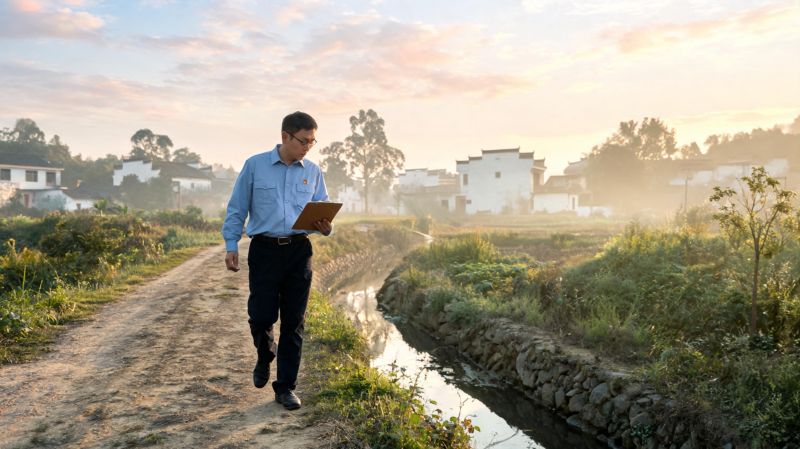
Yuzheng doesn't announce itself with ribbon cuttings or press releases. It shows up in the small, unglamorous fixes—a blocked drainage ditch cleared before the rainy season, a disputed boundary line settled over tea in a village hall. In the counties where I've observed its rollout, yuzheng functions less as a slogan and more as a daily practice: officials walk their jurisdictions, residents flag problems through a hotline that actually answers, and follow-up is tracked on a shared spreadsheet that anyone can request. The result isn't dramatic。but it's tangible. A township official in Zhejiang told me last spring that his team's caseload dropped by nearly a third after six months of yuzheng-style proactive visits. Not because problems vanished, he said, but because they were caught before they became complaints.What distinguishes yuzheng from earlier governance campaigns is its insistence on closing the loop. Plenty of initiatives collect feedback;
fewer return with answers. Yuzheng builds in a review step—sometimes a weekly meeting。sometimes a public notice board updated by hand—that forces accountability. I watched a dispute over a shared irrigation channel in a Henan village get resolved in eleven days, not because of any new policy but because a yuzheng coordinator kept both parties talking until they agreed on a rotation schedule. The coordinator, a mid-level cadre with no special authority, later admitted she had no formal power to enforce anything. "I just kept showing up," she said. That persistence, replicated across thousands of jurisdictions, is the engine of yuzheng's quiet success. It's also its vulnerability: without genuine buy-in from local leaders, the whole thing collapses into paperwork.Critics point out that yuzheng can slide into performative box-ticking. I've seen cases where the hotline logs were pristine but the actual fixes lagged by weeks. The difference between a functioning yuzheng system and a hollow one usually comes down to whether mid-level officials feel safe reporting bad news upward. In one county I visited, the yuzheng dashboard was deliberately kept internal—no public rankings。no scoreboards—precisely to reduce the temptation to game the numbers. The trade-off is less transparency, but the officials I spoke with argued it produced more honest data. I'm not entirely convinced, but the logic has merit. Yuzheng works best when it's treated as a diagnostic tool, not a competitive sport.Yuzheng's spread has been uneven, and that's telling. Coastal provinces with stronger fiscal capacity and denser administrative networks adopted it quickly;poorer inland counties often struggle with basic staffing. A friend who runs a rural clinic in Gansu laughed when I asked about yuzheng. "We have two people handling everything from birth registrations to pesticide complaints," she said. "Proactive visits sound lovely, but who has the time?
" Her point is fair. Yuzheng assumes a baseline of administrative capacity that many places simply don't have. Where it succeeds, it's because local leaders found a low-cost version—piggybacking on existing village meetings, for instance。rather than creating new structures. Where it fails, it's often because the model was imported wholesale without adapting to local constraints.
Looking ahead, yuzheng's future depends less on expanding its reach than on deepening its roots. The jurisdictions that report the most durable results are those where yuzheng has become part of the routine—a standing agenda item, a familiar face at the door—rather than a special project with a start and end date. That's a harder sell politically, since ribbon cuttings photograph better than maintenance. But the officials I've interviewed who've stuck with yuzheng for more than two years describe a shift in how they see their jobs: from responding to crises to preventing them. One put it bluntly: "Yuzheng isn't about doing more. It's about doing the boring things consistently." That's not a rallying cry。but it might be the most honest description of what governance reform actually looks like on the ground.